Reading the Label: How to Spot a Premium Supplement
OmniVita WellnessShare
A field guide to the supplement aisle, for the customer who reads the back of the box. Here's what separates a premium supplement from a marketing exercise.
The first 30 seconds.
You pick up a supplement bottle. You have about 30 seconds to decide whether it's worth bringing home. Here's the read.
Step 1: Flip the bottle. The front of the package is marketing. The back is information. The information matters.
Step 2: Find the supplement facts panel. It's the boxed table that lists serving size, servings per container, and the active ingredients with the actual amount per serving. If the bottle doesn't have one, it isn't following FDA dietary supplement labeling rules. Put it back.
Step 3: Scan the active ingredients column. Every active ingredient should have an amount in milligrams (or micrograms for some). If you see "Proprietary Blend: 500mg" with no breakdown of what's in the blend — red flag.
That's the 30-second filter. Most products on the shelf fail one of those three. The rest of this guide is what to look for when you've got a candidate that passed the filter.
Red flag #1: Proprietary blends.
A proprietary blend is a category of ingredient listing where the manufacturer can group multiple actives under one umbrella, list the total mass of the blend, but not disclose how much of each individual ingredient is in it.
Why this matters: it lets the manufacturer change the formulation freely. A "500mg Proprietary Energy Blend" could be 450mg of cheap filler and 50mg of the ingredient the marketing claims revolve around. Or vice versa. You have no way to know.
Real products disclose every active ingredient with the actual amount per serving. Standard form: ingredient name, mg per serving, percent Daily Value (when established). No blend hiding.
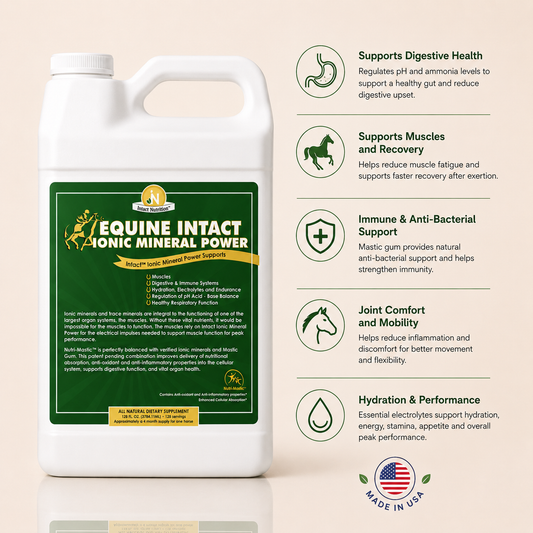
Every Intact-line product has a fully disclosed ingredient panel. Mastic gum dosage and ionic mineral panel content are on the label.
Red flag #2: Doses below threshold.
Even when ingredients are individually disclosed, the dose matters. Many "wellness" supplements include trendy ingredients at doses below what any published research actually examined.
Magnesium is the easiest example. The adult Reference Daily Intake (RDI) for magnesium is 420 mg. Most multivitamins deliver 50-100 mg of magnesium per serving. That's enough to put the ingredient on the label; it's not enough to do meaningful work.
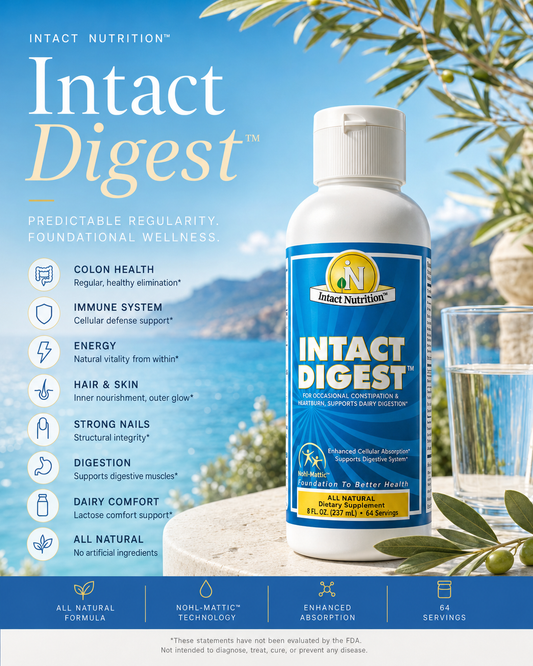
Per the published mineral assay, Intact Digest™ delivers approximately 360 mg of elemental magnesium per ¾-tsp serving — roughly a full adult daily intake of magnesium in one dose. That's the kind of number that matters.
The rule of thumb: if an ingredient is featured on the front label, check whether the dose on the back label is meaningful. If a product features mastic gum prominently but delivers only 50mg of it, that's marketing, not formulation.
Red flag #3: Disease claims.
Under FDA DSHEA (Dietary Supplement Health and Education Act of 1994), supplements may make structure/function claims — claims about how an ingredient supports a normal body function. They may NOT make disease claims — claims about treating, curing, preventing, or diagnosing any disease.
Examples of structure/function claims (legal): "supports normal digestive function," "helps maintain healthy joint mobility," "supports normal sleep quality."
Examples of disease claims (illegal on a supplement label): "treats arthritis," "cures insomnia," "prevents heart disease," "reverses aging."
If a supplement label or marketing makes disease claims, the manufacturer is operating outside the regulatory framework. That's a red flag both for product quality and for general trustworthiness — companies that ignore claim rules often ignore manufacturing rules too.
Look for the FDA disclaimer language: "This statement has not been evaluated by the FDA. This product is not intended to diagnose, treat, cure, or prevent any disease." Its presence is a sign the manufacturer is operating within the framework. Its absence, especially alongside disease-specific language, is a red flag.
Red flag #4: Vague "natural" or "clean" claims.
"Natural," "clean," "wholesome," "pure" — these terms have no regulatory definition in the supplement industry. They're marketing language. A "natural" product can include synthetic colors, artificial flavors, and binders that don't appear in nature anywhere.
What to look for instead: actual ingredient disclosure. Does the product include synthetic colorants? Artificial flavors? Sweeteners (acesulfame potassium, sucralose, etc.)? Binders and fillers (microcrystalline cellulose, magnesium stearate, etc. — some are fine in small amounts, but their presence is worth knowing)?
Every Intact-line product is mineral-and-botanical only. No synthetic colorants. No artificial flavors. No added sugar. The full ingredient panel is on the back label.
Green flag #1: Third-party verification.
The strongest signal of a premium supplement is third-party verification of what's in the bottle. The forms this takes:
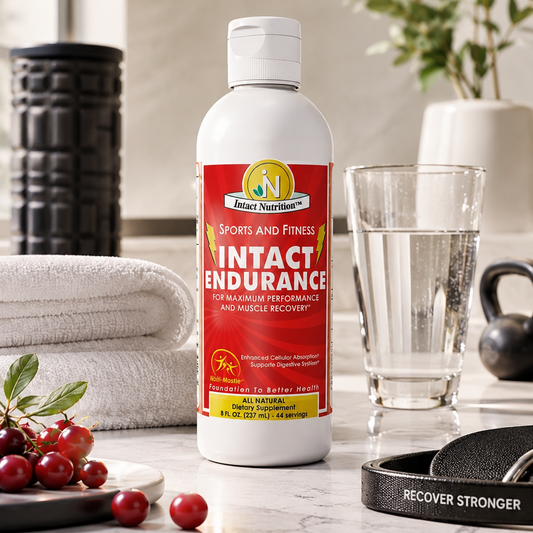
- Certificate of Analysis (CoA). An independent lab confirms the ingredient panel matches what's on the label. We publish the mineral assay for Intact Digest™ and Intact Endurance™ verifying the 360 mg magnesium dose and the full ionic mineral panel.
- NSF, USP, or NSF Certified for Sport. These are independent certification programs. We do not currently carry these certifications.
- Banned-substance testing (WADA / USADA). Important for competitive athletes. We do not carry these either.
Not every premium supplement carries every certification. The cost of certification is real. But a published Certificate of Analysis is the minimum signal that the manufacturer is willing to be audited.
Green flag #2: Honest "what to expect" language.
Premium supplement brands publish honest preview language. They tell you what to expect in the first week, including the not-fun parts. Days 1-3: more frequent bathroom trips. Days 1-7: changes in body odor as the body adjusts. Week 1-2: appetite changes.
Brands that hide the rough edges are usually optimizing for short-term reviews over long-term customer relationships. Brands that publish the honest preview are betting that the long-term result will keep you.
Green flag #3: Cost-per-day math published.
Most supplement marketing hides the daily cost behind monthly subscriptions or 60-count bottles in unfamiliar serving sizes. Premium brands publish the math.
Intact Digest™: ~$0.72 per day standard, $0.61 with Subscribe & Save.
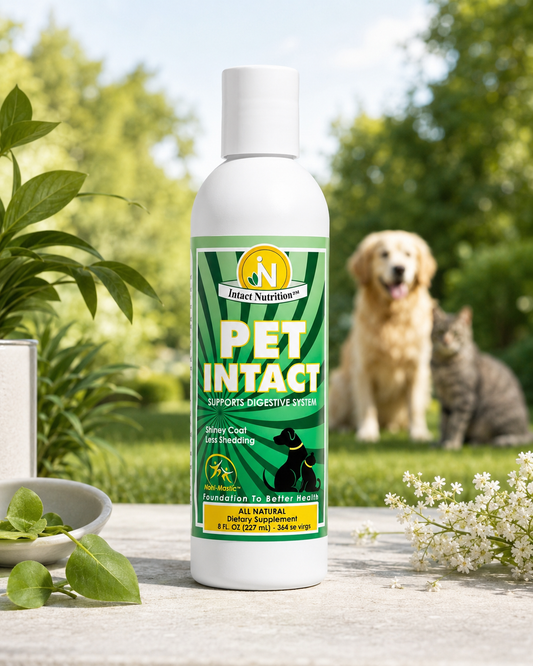
Pet Intact™: ~$0.60 per day for a 50-lb dog.
Equine Intact™: $2.87 per horse per day, $2.44 with Subscribe & Save.
The math is on our The Math page. You can compare it directly against whatever you're using now.
Green flag #4: Money-back guarantee that's actually honored.
30-day money-back guarantees are common in the supplement industry. Whether the brand actually honors them isn't. Read the brand's reviews — specifically look for reviews from customers who returned a product. The pattern there will tell you whether the guarantee is real or theatrical.
Our refund policy is on the policy page. The window is 30 days. We don't make returns difficult.
The premium-supplement checklist.
Bring this to the store next time:
- ✓ Full ingredient panel disclosed (no proprietary blends)
- ✓ Active ingredients dosed at meaningful levels
- ✓ Structure/function-only claim language (no disease claims)
- ✓ FDA disclaimer present on the label
- ✓ No synthetic colorants or artificial flavors
- ✓ Third-party verification available (Certificate of Analysis or certifications)
- ✓ Honest "what to expect" language in marketing
- ✓ Cost-per-day math available
- ✓ Money-back guarantee in writing
Every Intact-line product passes this checklist. Most products on the shelf next to ours don't.
If you're a label-reader, we built this brand for you. Browse the line, or start with the daily foundation: Intact Digest™.
This statement has not been evaluated by the FDA. Our products are not intended to diagnose, treat, cure, or prevent any disease.